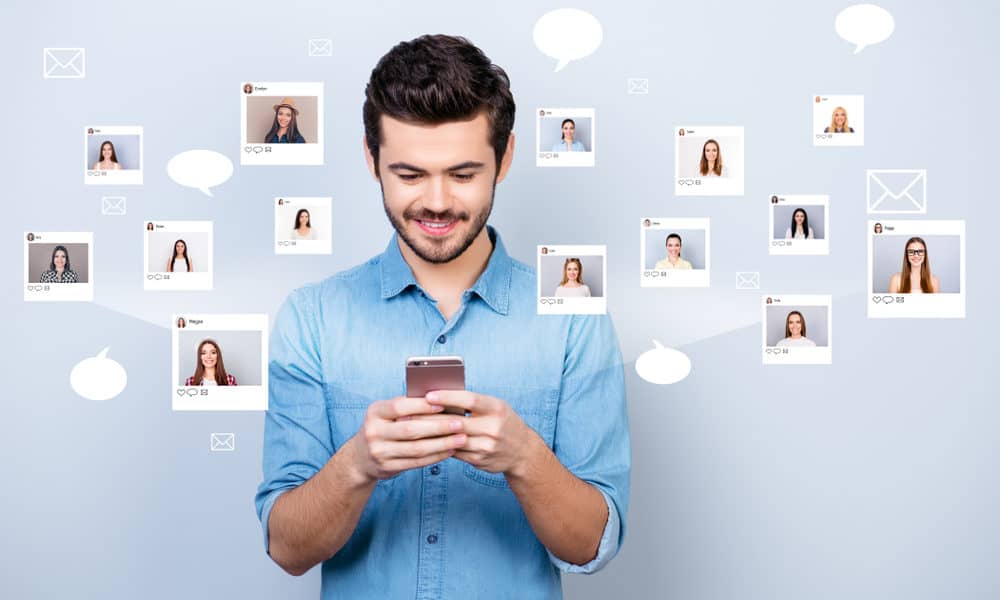

The way Americans meet romantic partners has shifted dramatically over the last decade. What used to happen at coffee shops, workplaces, and through mutual friends now increasingly starts with a swipe.
But does that mean real-life dating is dead? Not quite. Here is what the data and everyday experience actually show.
Online dating has grown faster than most expected.
The numbers are hard to ignore. According to the Pew Research Center, 30% of U.S. adults have used a dating app or website at some point, and among adults under 30, that figure jumps to nearly 50%.
The online dating industry in the US was valued at $3.1 billion in 2023, with platforms like Tinder, Hinge, and Bumble leading the market. That kind of growth does not happen unless people are actually using the product.
For many Americans, especially in urban areas, apps have become the default starting point and not a last resort.
Real-life dating has not disappeared, it has just changed.
Meeting someone organically still happens. A lot, actually.
A Stanford sociologist’s long-running study found that meeting through friends remains one of the top ways couples connect in the US, even in the app era. Workplaces, social events, bars, and gyms still produce real relationships every day.
The difference is that real-life dating now often works alongside apps, not instead of them. Someone might match with a person online, then suggest meeting at a local event they are both attending. The line between the two has blurred.
Who prefers online vs. real-life dating, and why it matters.
The preference for online vs. real-life dating often comes down to age, location, and personality.
| Group | Tendency |
|---|---|
| Adults under 35 | Higher app usage, comfortable with digital-first interaction |
| Adults 35-50 | A mix of both, apps used more intentionally |
| Adults 50+ | Prefer in-person, though app use is growing in this group |
| Urban residents | More likely to rely on apps due to busy schedules |
| Rural residents | More likely to meet through community and social circles |
This is not a generational divide so much as a lifestyle one. A 28-year-old in New York City and a 28-year-old in rural Tennessee may have completely different dating realities.
Online dating comes with real trade-offs.
Apps offer volume and convenience. You can meet people you would never cross paths with in daily life. That is genuinely useful. But the experience is not without friction.
- Dating app burnout is a documented phenomenon. Users report feeling fatigued by endless swiping.
- Misrepresentation is common, and profiles do not always reflect reality.
- Conversations can stall before they ever become actual dates.
A 2023 Forbes Health survey found that 79% of dating app users reported feeling frustrated with the experience at some point. That is a significant number of people continuing to use something that often does not feel great.
Real-life dating has its own limitations.
Organic meetings depend heavily on circumstance. You need to be in the right place, at the right time, around the right people, and that does not always happen on a schedule.
For people with demanding jobs, social anxiety, or limited community networks, waiting for a natural connection can feel passive and slow.
Is online dating more popular or real life dating?
By volume, online dating is currently the dominant starting point for new relationships in the US. But most successful relationships, whether they start online or off, eventually move into real life.
The smarter question is not which method is better; it is which one fits your life right now. For most Americans, the answer is some combination of both.